
Nitrification of Digestate
Transforming Biogas Digestate into Nitrate-Rich Fertilizer: A CuttingEdge Sustainable Solution to Significantly both Reduce Agricultural GHG Emissions and Increase Crop Yields.
PROJECT INFO:
 |
DURATION: 2025-2027 |
 |
FUNDING: The Mission Partnership |
 |
PARTNERS: |

CHALLENGE
Ammonia loss emissions
TECHNOLOGY
Automated nitrification process
POTENTIAL
Higher yield potential
Goal
- Agriculture: Cut GHG, Boost Yield via nitrification of Biogas Digestate
- Demonstrate nitrification of digestate converts ammonium to a nitrate fertilizer
- Validate elimination of ammonia evaporation and indirect N₂O emissions from nitrate fertilizer
- Prove 20% increased crop yields through more efficient plant uptake of nitrogen and sulfate
- Quantify scalability and sector climate impact for agriculture by 2030
Plan
- Run continuous, automated nitrification on digestate at Rybjerg Biogas to confirm stable ammonium → nitrate conversion at two 10 m³ tanks.
- Optimize oxygen dissolution, foam control, pH regulation, and dry-matter removal using improved MBBR tank design and efficient O₂ dissolving methods.
- Produce 3 nitrate fertilizer products (NO₃, PKNO₃, +50 NO₃-N) for agronomic tests.
- Measure nutrient/carbon mass balances, quantify GHG impact, validate economics, and present results to agriculture and biogas stakeholders to prove scalability and 2030 climate potential.
Expected results
- 200 L/h throughput with >95% NH₄→NO₃ conversion over continuous automated operation
- Prove near-zero ammonia evaporation and reduced indirect N₂O from the nitrate fertilizer
- 25% higher grass yields and nitrogen-use efficiency from nitrate fertilizer vs untreated digestate
- Verified climate impact, if the technology is used at biogas digestate in agriculture by 2030
PARTNERS:


Reach out to learn more about your funding opportunities:
Looking for funding opportunities for your innovation project?
The project is part of the Mission Partnership, and the funding is provided by Innovation Fund Denmark.
We continuously open new calls and programmes that support innovation within food and bioresources.

Mette Kallestrup Spring
Explore our other innovation collaborations
Unlocking value from food waste
Converting food waste into high-value products through modular biorefining

From walnut shells to circular materials
Developing bio-based composites from underutilized food industry side streams
Smart monitoring for CIP
Developing AI-powered monitoring for industrial cleaning processes
Naturlig resistens mod svampesygdomme
Robuste afgrøder med lavere pesticidforbrug og højere klimaresiliens

Green Chemistry for Sun Care
Developing bio-based ingredients for the next generation of sun care products
Mindre kemi i vinproduktionen
Udvikling af biologiske alternativer til kemisk sygdomsbekæmpelse i vinmarker
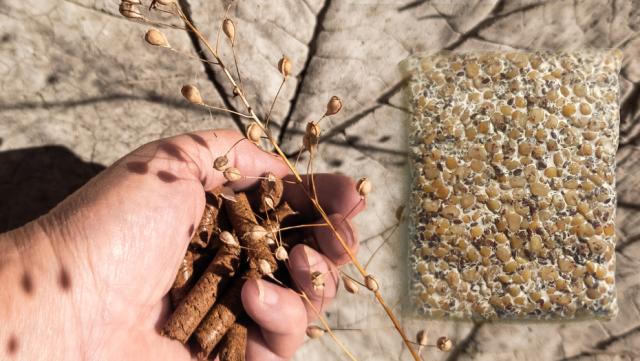
Tempeh af sidestrømme
Opgradering af camelina-pressekager til plantebaserede fødevarer gennem fermentering
Biostimulant fra dansk jord
Opskalering af en ny biostimulant til bæredygtig kornproduktion
Kritiske metaller i kredsløb
Udvikling af en biologisk løsning til genanvendelse af metaller fra elbilbatterier
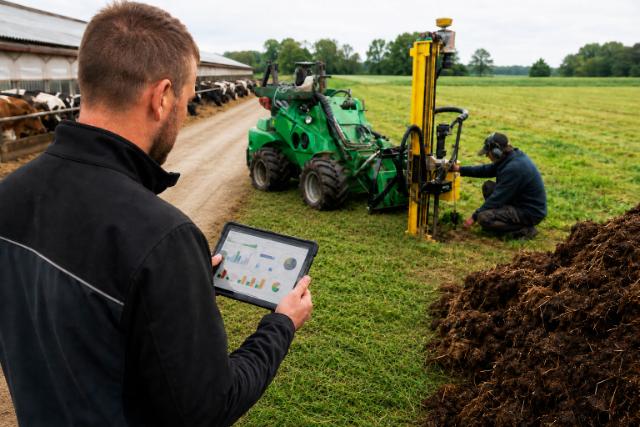
Data til grøn omstilling
Digital platform skal styre og dokumentere effekten af biologiske virkemidler


Digital jordvurdering uden fysiske prøver
AI og satellitdata til skalerbar jordkortlægning

Cashewrestprodukt mod kartoffelskimmel
Et nyt biobaseret alternativ til pesticider

Precision Laser Weeding
Validation of co₂ reduction potential through precision laser weeding in Danish crop production

RNA som ny fødevarekomponent
Kaskadeudnyttelse af sidestrømme fra mælkepulverproduktion

Turning Whey into Value
Dairy side streams as ingredients for sustainable cleaning

Green BioAcids
Biologisk opgradering af sidestrømme fra fødevareindustrien til organiske syrer
AQRIFood – Phase I
Advancing the quality of plant-based raw materials and ingredients for food applications – Phase I: Raw materials and derived ingredients

Climate-friendly plant biologicals
Developing novel methods for assessing the impact of plant biologicals on crop productivity, climate, environment, and biodiversity
MuscleFuel
Enhancing Growth and Performance of Cultivated Muscle Cells through Targeted Hydrolysis

GrassProtein
Increasing the protein yield of perennial forage crops and improving biorefining efficiency to produce bioeconomically sustainable livestock feed
MYCOFLAVOR
Bioflavoring brewer’s spent grain by edible mushroom mycelium in solid-state fermentations
Nudge2Green
Understanding and impacting consumer behavior towards food sustainability
ClimateReach
Grass-based dairy systems optimizing climate and environmental footprint along the whole feed chain
FarmCH4Track
Farm methane emission reduction through sensor-based digital innovation